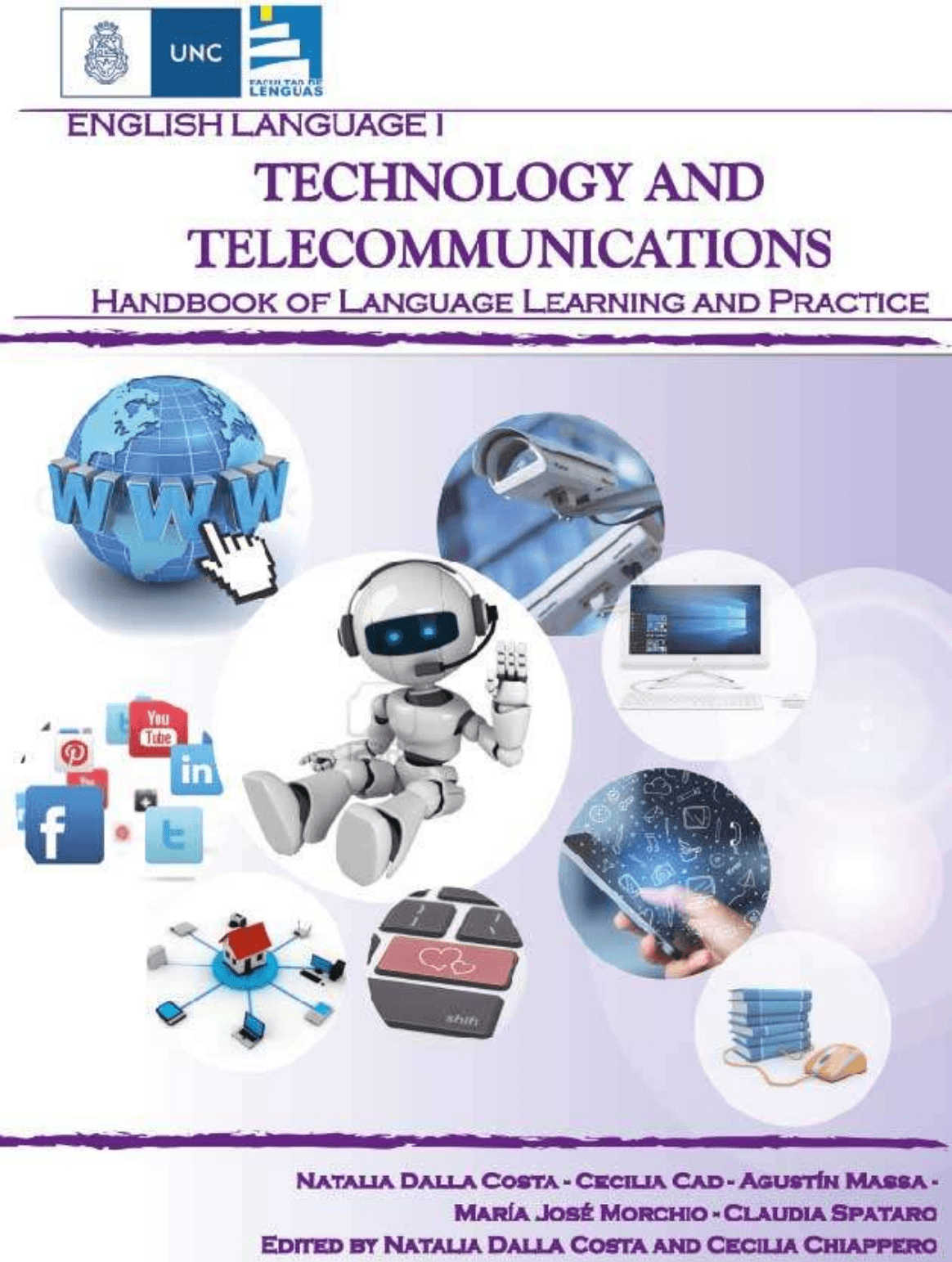

Technology and Telecommunications. Handbook of Language Learning and Practice.
Natalia Dalla Costa, Cecilia Cad, Ana Granata, Agustín Massa, María José Morchio and
Claudia Spataro
1
TABLE OF CONTENTS
PREFACE ............................................................................................... 1
1. TECHNOLOGY AND TELECOMMUNICATIONS .................................... 3
Technology ......................................................................................... 3
Technological Innovations ................................................................ 11
Telecommunications ........................................................................ 13
Consolidation ................................................................................... 21
2. COMPUTERS .................................................................................... 23
Computer Hardware and Software .................................................... 23
Uses of Computers ........................................................................... 29
Computer Problems .......................................................................... 34
Consolidation ................................................................................... 36
3. THE INTERNET ................................................................................. 37
The Internet ...................................................................................... 37
E-mail ............................................................................................... 44
Consolidation ................................................................................... 48
4. SOCIAL NETWORKS AND ONLINE DATING ...................................... 49
Social Networks ............................................................................... 49
Online dating .................................................................................... 59
Consolidation ................................................................................... 63
6. TELEWORKING AND E-LEARNING ................................................... 65
Teleworning ...................................................................................... 65
E-learning ......................................................................................... 71
Consolidation ................................................................................... 76
5. MOBILE PHONES .............................................................................. 77
Mobile Phones .................................................................................. 77
Using Whatsapp ............................................................................... 80
Benefits and Problems with Mobiles .................................................. 83
Consolidation ................................................................................... 90
6. SURVEILLANCE AND CYBER CRIMES .............................................. 91
Surveillance Technology .................................................................. 91
Cyber Crimes .................................................................................... 95
Consolidation ................................................................................. 100
BIBLIOGRAPHY ................................................................................... 101

Technology and Telecommunications. Handbook of Language Learning and Practice.
Natalia Dalla Costa, Cecilia Cad, Ana Granata, Agustín Massa, María José Morchio and
Claudia Spataro
2
PREFACE
This handbook is an attempt to provide students of English Language I
with language learning and practice material for Unit 1: Technology and
Telecommunications. It contains a great variety of speaking, reading, listening
and writing activities that will help students practise the four skills in an
integrated way when they deal with the main subtopics related to the unit. Many
of these activities have been revised or changed based on our class experience
and the teachers‘ and students‘ comments. The handbook is divided into six
main sections:
Technology and Telecommunications,
Computers,
The
Internet, Social Networks and Online Dating, Mobile Phones, and
Surveillance and Cyber Crimes
so that students can learn about different
aspects of technology in an organised way. Each section begins with a list of
the main learning objectives and subsections. Learning strategies are included
so that students learn how to control and improve their own learning. Grammar
in Use activities are also included throughout the handbook to offer students
further practice in the structures learned in class. At the end of each section,
students will find reference to the online resources of the virtual classroom
(VLE) that will help them further practise the topics and a checklist that will help
them revise and check their progress. We hope that this handbook can help
students learn the topic of the unit and English in an enjoyable way.
Natalia Dalla Costa, Cecilia Cad, Ana Granata,
Agustín Massa, María José Morchio and Claudia Spataro

Technology and Telecommunications. Handbook of Language Learning and Practice.
Natalia Dalla Costa, Cecilia Cad, Ana Granata, Agustín Massa, María José Morchio and
Claudia Spataro
3
Technology and Telecommunications. Handbook of Language Learning and Practice.
Natalia Dalla Costa, Cecilia Cad, Ana Granata, Agustín Massa, María José Morchio and
Claudia Spataro
4
TECHNOLOGY AND
TELECOMMUNICATIONS
Main
objectives
To learn about ICT
To learn specific vocabulary related to technology,
telecommunications and technological innovations
To learn how and when to use the strategies setting
goals and objectives, using your dictionaries,
semantic mapping, using the VLE and self-
evaluating
Sections
Technology
Telecommunications
Technological innovations
Consolidation
SETTING GOALS AND OBJECTIVES
Setting aims for language learning is a useful strategy as it helps
you organize and plan your learning. This consists of setting short-term
objectives (such as learning vocabulary related to a subtopic by Friday, listening
to an audio three times or reading a text in 15 minutes) as well as long-term
objectives (like being able to discuss different topics in an accurate way or
mastering a language at an intermediate level by the end of the year). To help
you use this strategy, each chapter of the handbook sets the short-term goals
that you are expected to achieve once you have finished studying the chapter.
Adapted from: Oxford, R. (1990). Language learning strategies. What every teacher should
know. USA: Heinle & Heinle.
TECHNOLOGY
1
1.1. In this section, we will discuss the meaning and the impact that
technology has on our lives. Read the etymological explanation of
the origin of the word.
1
In Keynote Intermediate (2016) you will find an interesting text and activities about new
gadgets (p.90-91).
Technology and Telecommunications. Handbook of Language Learning and Practice.
Natalia Dalla Costa, Cecilia Cad, Ana Granata, Agustín Massa, María José Morchio and
Claudia Spataro
5
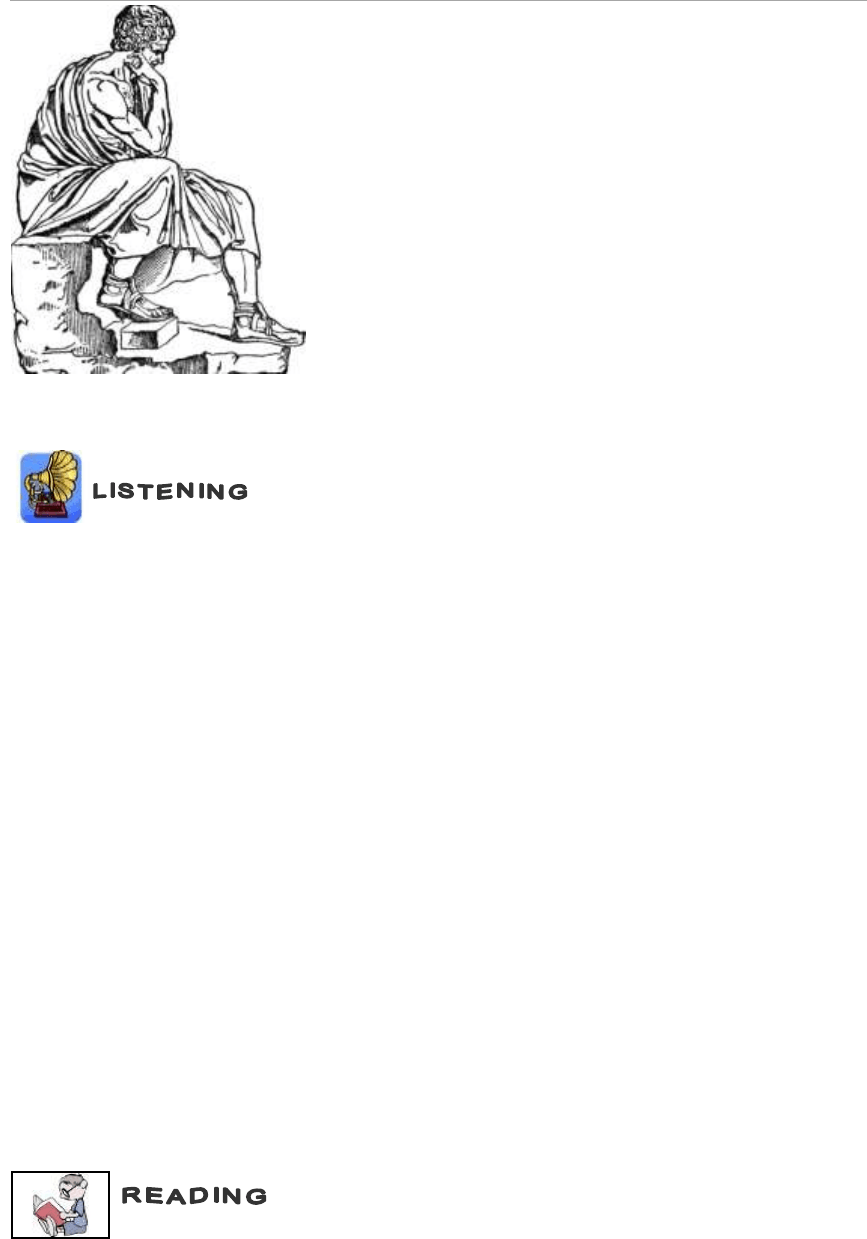
Etymologically the term technology comes from the
combination of these two Greek morphemes tékhnē,
(meaning ―art‖) and -logía (meaning ―study‖).
Aristotle (384-322 BC) stated that technology is the
consequence of imitation of nature, but the
philosopher added in his book Physics Book II that:
"generally art in some cases completes what nature
cannot bring to a finish" (Schummer, 2001, 105-120).
Adapted from: What is technology? Retrieved from: http://www.myenglishpages.com/blog/
1.2. When you think of the word technology, what comes to mind? Listen to
a speaker defining the word technology and complete the text below.
What is Technology?
When you think of the word technology, what comes to mind? It might sound like
something from a sci-fi show or something that has to run on electricity. Technology
makes us think of the very complex, but energy doesn't have to be complex.
Technology is the _______________________ for _______________________,
whether in _______________________ or in _______________________. So,
basically, whenever we use our scientific knowledge to achieve some specific
purpose, we're using technology. Well, there is slightly more to it than that.
Technology usually _______________________, but that equipment can
_______________________. It can be anything from _______________________,
all the way up to _______________________.
Adapted from: Wood, D. (2016). What is technology? Chapter 8, lesson one. Retrieved from:
http://study.com/academy/lesson/what-is-technology-definition-types.html#lesson
1.3. You are going to read an article about modern technology. Ten
sentences have been removed from the text. Choose from the
sentences (A-K) the one which fits each gap (1-10). There is one extra
sentence which you don’t need to use.

Technology and Telecommunications. Handbook of Language Learning and Practice.
Natalia Dalla Costa, Cecilia Cad, Ana Granata, Agustín Massa, María José Morchio and
Claudia Spataro
6
A. In an affluent society, there is time for continuing education, the arts,
social service, sports, and participation in community life.
B. People now carry with them devices that give them access to all the
world‘s information, but these gadgets can also offer almost all the world
vast quantities of information about their users.
C. Science, religion, and philosophy all have a role to play in assessing the
relationship of technology to these values.
D. ICT offers the possibility of instant worldwide communication, greater
interaction and understanding in the global village.
E. While some people argue that technology has helped human beings to
extend their potential, some others believe that it poses a threat to
authentic human life.
F. Both the advantages and disadvantages of modern technology should be
considered to understand the impact of technological developments.
G. This trend is fast catching on and a combination of lower prices of robots
and lowering of wage cost is making mechanization extremely attractive.
H. Technology allows homeowners to run their home while away through a
remote, often on a smartphone.
I. Informal recycling operations in these towns do not have the resources to
safely recycle tech materials.
J. Since users have built expansive social networks online, the depth of
their networks offline has decreased.
K. Online communication has opened the door to new ways of
communicating with others and taking part in virtual communities.
Modern Technology: A Blessing in Disguise
Appraisals of modern technology diverge widely. Some see it as the beneficent
source of higher living standards, improved health, and better communications.
They claim that any problems created by technology are themselves amenable to
technological solutions. Others are critical of technology, holding that it leads to
alienation from society, environmental destruction, the mechanization of human life,
and the loss of human freedom. 1.______
Advantages of Modern Technology
There are many advantages of modern technology that we see in our daily life. The
major technology benefits are listed below.
Access. With information and communication technologies (ICT), the speed, range,
and scope of communication have vastly increased. 2.______ Furthermore,

Technology and Telecommunications. Handbook of Language Learning and Practice.
Natalia Dalla Costa, Cecilia Cad, Ana Granata, Agustín Massa, María José Morchio and
Claudia Spataro
7
technology holds the promise of enabling unlimited access to information
irrespective of a person's social situation. In today’s world, technology has changed
and continues to transform the educational experience of students living in rural
and remote areas.
Communication. Technology has improved communication in many ways. It has
increased the reliability of sending messages to others, made it easier to meet new
people and keep in touch with friends. The accessibility of technology means that
users do not need to be in any special location like a post office or mail room to
send a message; all they need is a cell phone. 3.______
Leisure. Increases in productivity have led to shorter working hours. Computers and
automation hold the promise of eliminating much of the monotonous work typical of
earlier industrialism. 4.______ Technology can contribute to the enrichment of
human life and the flowering of creativity. Laborsaving devices free people to do
what machines cannot do.
Housing and lifestyle. In recent years, great strides have been made in making
homes a bit more tech savvy. 5.______ Thanks in particular to the advanced
technological solutions such as automated door locks, security cameras and
lighting control, people’s homes are now more secure than ever.
Disadvantages of Modern Technology
Despite the benefits, there are also many drawbacks that technology has brought
about.
Loneliness. Recent studies have found that, despite being more connected than
before, more people feel more alone than ever. Surprisingly, those who report
feeling most alone, are those you would expect it from least: young people under
35 who are the most prolific social networkers of all; 48% of respondents only had
one confidant compared to a similar study 25 years ago when people said they had
about three people they could confide in. 6.______
Worker displacement. Job losses due to automation, artificial intelligence and
improvement in technology are a growing tendency seen across the world.
7.______ Consequently, robots are doing most of the jobs which used to be done

Technology and Telecommunications. Handbook of Language Learning and Practice.
Natalia Dalla Costa, Cecilia Cad, Ana Granata, Agustín Massa, María José Morchio and
Claudia Spataro
8
by humans; for instance, middle-skilled employees, such as bookkeepers, clerks
and assembly-line workers, have already been replaced by robots in countries such
as Japan, Germany and US.
Technotrash. The U.S. exports 50 to 80% of its e-waste to poor Asian countries to
be ―recycled‖. This probably sounds as a positive measure, but the word recycling
belies the devastating environmental impacts of international waste dumping. What
really happens to recycled technotrash is that it is processed by poor workers in
rural towns in places like China and India. One of the most infamous examples of a
tech recycling town is Guiyu, China. 8.______. They expose workers and their
communities to shocking levels of toxic materials, turning towns into contaminated
dumps.
Privacy. Recent advances in technology threaten privacy. They have reduced the
amount of control over personal information and open up the possibility of a range
of negative consequences as a result of access to personal data. 9.______. The
revelations of Edward Snowden have demonstrated that these worries are real and
that the technical capabilities to collect, store and search large quantities of data
concerning telephone conversations, Internet searches and electronic payment are
now in place and are routinely used by government agencies.
Technology is a complex social phenomenon that is considered to be a double-
edged sword. 10.______. Given the above information, it can be concluded that the
welfare of humankind requires a creative technology that is economically
productive, ecologically sound, socially just, and personally fulfilling.
Adapted from: Barbour, Ian (2012). Ethics in an Age of Technology. Retrieved from:
http://www.giffordlectures.org/books/ethics-age-technology/chapter-1-views-technology
1.4. Match the words/phrases in bold in the text with their correct
meaning.
1. technological
a. [no plural] /tek sæv.i/ (informal) knowing a lot
about modern technology and how to use it.
2. development
b. noun [countable] /dɪˈvaɪs/ a machine or tool that
does a special job.
3. improve
c. /ˈteknəʊ træʃ/ [ no plural ] (also called electronic
waste or e-waste), is any broken or unwanted
electrical or electronic devices.

Technology and Telecommunications. Handbook of Language Learning and Practice.
Natalia Dalla Costa, Cecilia Cad, Ana Granata, Agustín Massa, María José Morchio and
Claudia Spataro
9
4. tech savvy
d. adjective /tek·nəˈlɒdʒ·ɪ·kəl/ relating to or
involving technology
5. drawback
e. phrase /ˈdʌbəl edʒ ˈsɔːd/ A situation or course of
action having both positive and negative effects.
6. catch on
f. noun [countable] /ˈɡædʒɪt/ a small, useful, and
cleverly-designed machine or tool.
7. technotrash
g. /dɪˈveləpmənt/ noun [uncountable] the process
of gradually becoming bigger, better, stronger, or
more advanced.
8. device
h. phrasal verb /kӕtʃ/ to become popular.
9. gadget
i. noun [countable] /ˈdrɔːbæk/ a disadvantage of a
situation, plan, product, etc.
10. double-edged
sword
j. .verb /ɪmˈpruːv/ [intransitive, transitive] to make
something better, or to become better
Taken from http://www.ldoceonline.com/, http://dictionary.cambridge.org/ and
https://www.ozdic.com/
1.5. Read the text again. Then, answer these questions.
1. How has access to technology changed people‘s life?
2. Explain the meaning of the words reliability and accessibility in this context.
3. Which are the benefits that laborsaving devices have brought about?
4. Why does the author state “people’s homes are now more secure than
ever”?
5. Who feel most alone? Why is this information surprising?
6. What does worker displacement mean? Why is this taking place?
7. What does recycling belies the devastating environmental impacts of
international waste dumping mean?
8. Which are the negative consequences of access to personal data?
1.6. Make a chart with the main points of the benefits and the drawbacks
of modern technology mentioned in the article.
1.7. Complete the mind map with the words below. Use your monolingual
dictionaries to place the words under the correct category. Then
copy the examples provided for each word by the dictionary.
create
state-of-the-art
take advantage of
develop
communications
technologist

Technology and Telecommunications. Handbook of Language Learning and Practice.
Natalia Dalla Costa, Cecilia Cad, Ana Granata, Agustín Massa, María José Morchio and
Claudia Spataro
10
ADJ
N
current
technology
V
N
employ
technology
USING YOUR MONOLINGUAL DICTIONARIES
Using your monolingual dictionaries to learn English is a useful
and valuable strategy. In fact, with your monolingual dictionaries, you can get
information about the spelling, pronunciation, form, meaning and use of a word.
If the word you are looking up has more than one possible spelling, monolingual
dictionaries usually show the alternative spelling in brackets. Monolingual
digital
information
educational
technophile
medical
military
technophobe
apply
employ
the latest
cutting-edge
technocrat
introduce
invest in
voice-recognition
alternative
technological
white hot
new
modern
advanced
high
bleeding edge
computer
Compound nouns
Communications Technology
Word family
technologist
Technology and Telecommunications. Handbook of Language Learning and Practice.
Natalia Dalla Costa, Cecilia Cad, Ana Granata, Agustín Massa, María José Morchio and
Claudia Spataro
11
English dictionaries show the pronunciation of a word and also point out if there
is a difference between British and American pronunciation. At the beginning of
each entry, dictionaries also show the plural form of nouns, the comparative and
superlative form of adjectives and the irregular forms of verbs. The register of a
word is also indicated in brackets and the typical prepositions, adverbs and
structures of a word are usually in bold. It is also useful to know that the
meanings of the words are organized according to frequency; that is, the most
common meanings of a word are listed first. Dictionaries exemplify the
meanings and uses of a word with sentences taken from a corpus, i.e.,
sentences taken from ―real‖ sources. Read these examples to learn typical
ways in which the word is used and useful collocations. Finally, monolingual
dictionaries also list frequent set expressions and idioms with the word given.
As you can see, your monolingual dictionaries contain a lot more than just the
meanings of words!
Adapted from: Oxford, R. (1990). Language learning strategies. What every teacher should
know. USA: Heinle & Heinle
1.8. You will listen to an interview with a teacher, Phil, who talks about
gadgets and how he uses them in his daily life. Decide whether the
statements below are TRUE (T) or FALSE (F).
1. He was an automotive and then he studied Engineering.
2. Phil's favourite gadget is his laptop computer.
3. Phil came into Engineering to try something different and to maybe gain
confidence in himself as well.
4. Phil designs video games.
5. He sometimes listens to music.
6. Phil downloads music from bands from all over the world that, probably,
nobody would have been able to find information about in the past.
7. When he was younger, he was absolutely useless at taking photographs.
8. Phil now can take amazing pictures with his digital camera.
9. Phil used to have a CD player that was like a brick.
10. He listens to the news from the BBC in the morning when goes to his
home city.
Retrieved from: http://www.elllo.org/english/0701/T711-Phil-Gadgets.htm
1.9. Use the vocabulary learned in this section to discuss the following
questions.
Technology and Telecommunications. Handbook of Language Learning and Practice.
Natalia Dalla Costa, Cecilia Cad, Ana Granata, Agustín Massa, María José Morchio and
Claudia Spataro
12
Do you think it is impossible to survive without technology? Why (not)?
Are you a technophobe or a mouse potato? Why?
Which is your favourite gadget? Why? Could you do without it?
In your view, what will the next technological invention be?
Culture note: Those who belong to the Generation Y/Millennials/Net-Generation (born
between the early 1980s to the mid 1990s) and Generation Z (born in 1995 or later) are usually
refered to as ―digital natives‖ or screenagers as they were born during or after the rise of digital
technologies respectively. On the other hand, those who were born before the advent of digital
technology but are keen to adopt many aspects of the new technology are referred to as ―digital
immigrants‖.
Adapted from http://metro.co.uk/2017/09/20/what-is-a-millennial-6942535/ and
https://mashable.com/2016/06/20/what-is-a-digital-native/#iwfJXabygmqm
TECHNOLOGICAL INNOVATIONS
2
1.10. Discuss the following questions with your classmates.
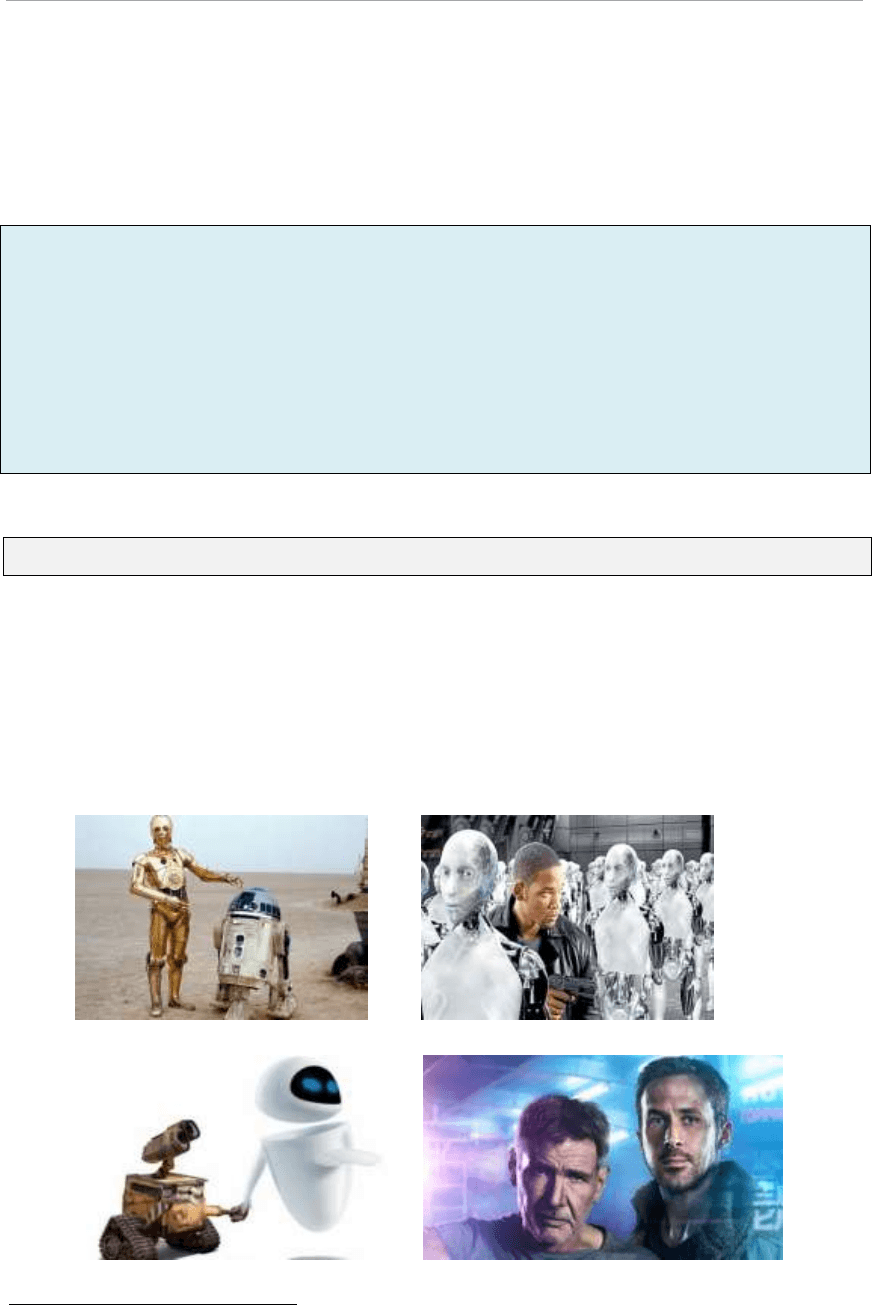
Do you believe that in five years’ time homes will have domestic robots? Why (not)?
What is your favorite science fiction movie about the future?
Have you watched these films, what role do robots play?
2
In Keynote Intermediate (2016) you will find a TED talk about an innovative form of
transportation (p.84-87) and an interesting text about the future of transport (p.88).
Technology and Telecommunications. Handbook of Language Learning and Practice.
Natalia Dalla Costa, Cecilia Cad, Ana Granata, Agustín Massa, María José Morchio and
Claudia Spataro
13
What jobs do you think may be replaced by robots in the future?
Do you think a robot could be used to teach or translate languages? Why / not?
What do you understand as Artificial Intelligence (AI)?
1.11. Watch a short video about Artificial Intelligence (AI) and complete the
sentences below.
What is Artificial Intelligence (or Machine Learning)?
https://www.youtube.com/watch?v=mJeNghZXtMo&t=117s
1. In basic terms, AI is a broad area of computer science that makes
_______________ seem like they have _______________
_______________.
2. So it‘s not only programming a computer to drive a car by obeying
_______________ signals, but it‘s when that program also learns to
exhibit signs of _______________ like road rage.
3. This technology isn‘t new; for the past half a _______________, it‘s been
an idea ahead of its time.
4. The term ―artificial intelligence‖ was first coined back in
_______________ by Professor John McCarthy.
5. Professor McCarthy tried to prove that machines could learn like a young
_______________ does; using trial and error.
6. They tried to understand how to make machines use _______________,
form abstractions and concepts, solve all kinds of _______________
reserved for humans and improve themselves.
1.12. What makes humans different from robots? You will watch a
segment from the British science fiction series Black Mirror, (episode
1, season 2, Be Right Back). Answer the questions below.
Martha and Ash are a young couple who move to a remote house in the
countryside. The day after moving into the house, Ash is killed while returning a
hire van. You will watch a segment that starts when Martha is at Ash’s funeral.
Technology and Telecommunications. Handbook of Language Learning and Practice.
Natalia Dalla Costa, Cecilia Cad, Ana Granata, Agustín Massa, María José Morchio and
Claudia Spataro
14
1. What does the lady (Sara) at the funeral tell Martha?
2. Martha phones Sara. What does Sara tell Martha (about the app she
insists Martha should try)?
3. How does Martha feel about it?
4. After she finds out that she is pregnant, what does she allow the Beta
software do?
5. She goes to a place in the countryside. Why does she go there?
6. What did Ash tell Martha about this place? Martha goes to the doctor.
What happens when she leaves?
7. What is ―the next level‖ mentioned by the artificial Ash?
8. How does Martha activate the android?
9. What do you think will happen next?
Adapted from: https://www.youtube.com/watch?v=J5TAnU7gHws
Culture note: A black mirror is the reflection of an unlit computer or smart phone screen after it
is shut down while you are in front of it, giving you a chance to rethink your life as you see
yourself.
Taken from http://www.urbandictionary.com/define.php?term=Black%20Mirror
What makes humans different from androids?
Name the challenges that you think humanity will be forced to face if androids are
not properly programmed and if their use is not properly regulated.
TELECOMMUNICATIONS
3
1.13. Look at the following cartoon. Do you find it funny? Why?
3
In Keynote Intermediate (2016) you can try a quiz to discover the means of communication you
use the most (p.66).
Este documento contiene más páginas...
Descargar Completo
Handout Technology 2018- Para AV2020.pdf
 Estamos procesando este archivo...
 Lamentablemente la previsualización de este archivo no está disponible. De todas maneras puedes descargarlo y ver si te es útil.
Descargar
Estamos procesando este archivo...
Lamentablemente la previsualización de este archivo no está disponible. De todas maneras puedes descargarlo y ver si te es útil.